What is bladder cancer?

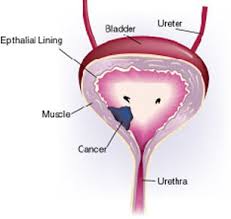
Cancer is the growth of abnormal cells in the body. These extra cells grow together and form masses, called tumors. In bladder cancer, these growths happen in the bladder.
The bladder is the part of your urinary tract that stores your urine until you are ready to let it out. See a picture of the female urinary system or male urinary system.
Bladder cancer can usually be cured if it is found and treated early. And most bladder cancer is found early.
What causes bladder cancer?
We don't know what causes bladder cancer. But we do know that smokers are much more likely to get it than nonsmokers. In fact, experts believe that smoking causes about half of bladder cancer in men and more than one-fourth of bladder cancer in women.
What are the symptoms?
Blood in the urine is the main symptom. Other symptoms may include having to urinate often or feeling pain when you urinate.
These symptoms can be caused by other problems, including a urinary tract infection. Always call your doctor if you see blood in your urine.
How is bladder cancer diagnosed?
To diagnose bladder cancer, your doctor will:
Ask about your medical history and do a physical exam, including a vaginal or rectal exam.
Test your urine to look for blood or abnormal cells.
Do a cystoscopy, a test that lets your doctor look into your bladder with a thin, lighted viewing tool. Small tissue samples (biopsies) are taken and looked at under a microscope to find out if there are cancer cells.
How is it treated?
Treatment choices for bladder cancer include surgery to remove the cancer, anti-cancer drugs (chemotherapy), medicines that help your immune system (biological therapy), and radiation.
The treatment depends a lot on how much the cancer has grown. Most bladder cancers are treated without having to remove the bladder.
Sometimes doctors do have to remove the bladder. For some people, this means having urine flow into a bag outside of the body. But in many cases, doctors can make a new bladder—using other body tissue—that works very much like the old one.
Bladder cancer often comes back. The new tumors can often be treated easily if they are caught early. So it’s very important to have regular checkups after your treatment is done.
It’s common to feel scared, sad, or angry after finding out that you have bladder cancer. Talking to others who have had the disease may help you feel better. Ask your doctor about support groups in your area. You can also find people online who will share their experiences with you.
What increases your chances of getting bladder cancer?
Anything that increases your chances of getting a disease is called a risk factor. The main risk factor for bladder cancer is smoking. Cigarette smokers are much more likely than other people to get bladder cancer.
Other risk factors include:
Being older than 40.
Being male. Men are 4 times more likely than women to get bladder cancer.
Being exposed to cancer-causing chemicals, such as those used in the wood, rubber, and textile industries.
Cancer is the growth of abnormal cells in the body. These extra cells grow together and form masses, called tumors. In bladder cancer, these growths happen in the bladder.
The bladder is the part of your urinary tract that stores your urine until you are ready to let it out. See a picture of the female urinary system or male urinary system.
Bladder cancer can usually be cured if it is found and treated early. And most bladder cancer is found early.
What causes bladder cancer?
We don't know what causes bladder cancer. But we do know that smokers are much more likely to get it than nonsmokers. In fact, experts believe that smoking causes about half of bladder cancer in men and more than one-fourth of bladder cancer in women.
What are the symptoms?
Blood in the urine is the main symptom. Other symptoms may include having to urinate often or feeling pain when you urinate.
These symptoms can be caused by other problems, including a urinary tract infection. Always call your doctor if you see blood in your urine.
How is bladder cancer diagnosed?
To diagnose bladder cancer, your doctor will:
Ask about your medical history and do a physical exam, including a vaginal or rectal exam.
Test your urine to look for blood or abnormal cells.
Do a cystoscopy, a test that lets your doctor look into your bladder with a thin, lighted viewing tool. Small tissue samples (biopsies) are taken and looked at under a microscope to find out if there are cancer cells.
How is it treated?
Treatment choices for bladder cancer include surgery to remove the cancer, anti-cancer drugs (chemotherapy), medicines that help your immune system (biological therapy), and radiation.
The treatment depends a lot on how much the cancer has grown. Most bladder cancers are treated without having to remove the bladder.
Sometimes doctors do have to remove the bladder. For some people, this means having urine flow into a bag outside of the body. But in many cases, doctors can make a new bladder—using other body tissue—that works very much like the old one.
Bladder cancer often comes back. The new tumors can often be treated easily if they are caught early. So it’s very important to have regular checkups after your treatment is done.
It’s common to feel scared, sad, or angry after finding out that you have bladder cancer. Talking to others who have had the disease may help you feel better. Ask your doctor about support groups in your area. You can also find people online who will share their experiences with you.
What increases your chances of getting bladder cancer?
Anything that increases your chances of getting a disease is called a risk factor. The main risk factor for bladder cancer is smoking. Cigarette smokers are much more likely than other people to get bladder cancer.
Other risk factors include:
Being older than 40.
Being male. Men are 4 times more likely than women to get bladder cancer.
Being exposed to cancer-causing chemicals, such as those used in the wood, rubber, and textile industries.
